
Pre-pilots
The pre-pilot phase of the Flex4Res project is designed to test and refine solutions incrementally, aiming to achieve higher Technology Readiness Levels (TRLs). This is accomplished by initially deploying and testing these solutions in learning factory environments that replicate real industrial conditions using actual process data in controlled settings.
Testing takes place across several locations, including the teaching factory at LMS, the Forming-Lab at the University of Siegen, IDEKO’s digital grinding hub, the TEC-Lab at IFT from TU Vienna and the FlowFactory and TEC-Lab at PTW from TU Darmstadt.
In these learning factories, scenarios simulating production disruptions are developed. Solutions are evaluated and improved based on these scenarios. Once the resilience mechanisms demonstrate success, the solutions are ready for application in real industrial environments.
Pre-pilot at LMS
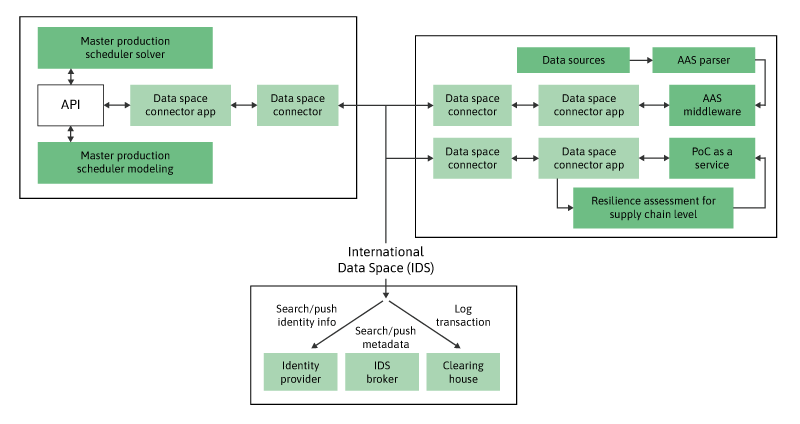
The pre-pilot provides early validation for tools developed in the Sidenor use case. This controlled environment assesses the performance and integration of key technologies. Significant progress has been made, including the implementation of an Asset Administration Shell (AAS) middleware, a Master Production Scheduler and a resilience assessment tool for the supply chain. Additionally, essential components of the data space have been established and scenarios for generating synthetic data are being defined.
The next steps involve generating synthetic data to simulate real-world conditions and using this data to validate the Master Production Scheduler and the resilience assessment tools. These activities will ensure the solutions are robust and ready to address real-world challenges, setting the stage for full-scale implementation in the Sidenor use case.
Pre-pilot at University of Siegen
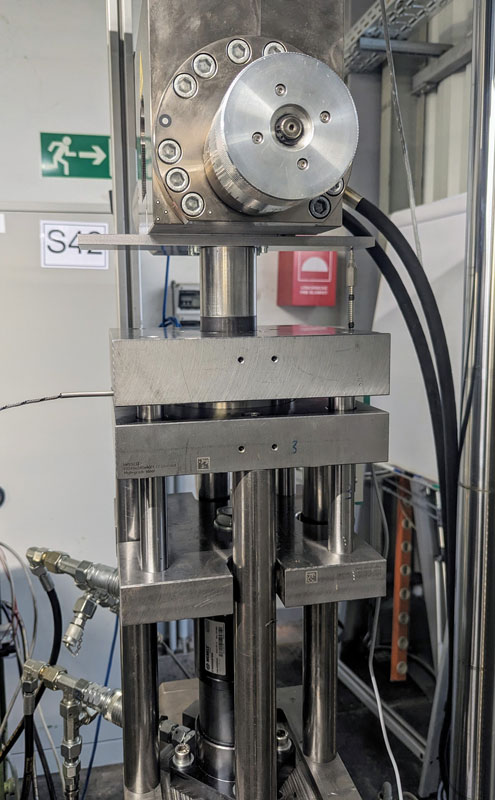
At the University of Siegen’s Forming Lab, the pre-pilot focuses on the early development and validation of tools for the Hans Berg use case. The focus is on integrating sensors into the forming tool as part of the resilience measures and testing the main functions of the reconfiguration toolbox. As part of the reconfiguration toolbox, a fuzzy Case-Based Reasoning (CBR) system for fault detection in a single-stage deep drawing process and recording body movements during reconfiguration for the initial database of the human assistance system.
The next steps include early validation of the fuzzy CBR, manufacturing and testing forming punches equipped with integrated optical fiber and conventional sensors and conducting the round of experiments with reconfiguration systems.
Pre-pilot at IDEKO
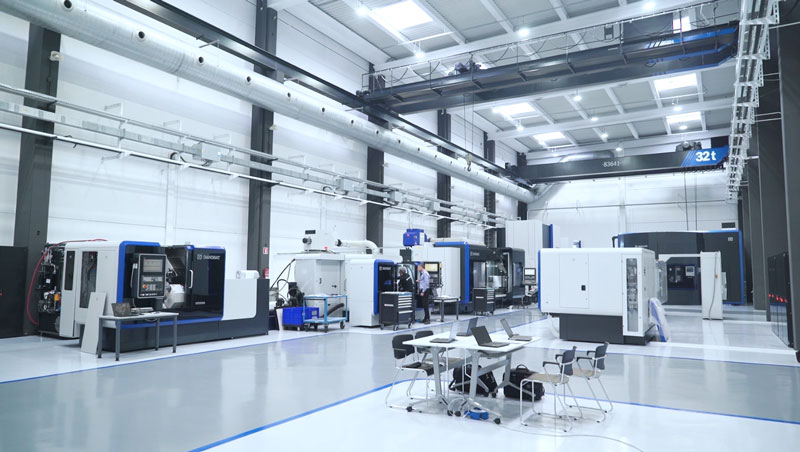
The solutions developed in the GOIMEK use case are tested in the IDEKO digital grinding hub. These include the early testing of diagnostic cycles for resilience calculation, AAS management infrastructure, and integration with resilience calculation tools at the machine level. The goal is to implement a production planner that leverages real-time data to optimise scheduling and propose reconfiguration strategies and alternative schedules if deadlines are at risk.
A predictive maintenance module will identify anomalies that could lead to failure and actions will be suggested to enable fast production reconfiguration. Additionally, secure data exchange, based on the Gaia-X concept, will facilitate communication between client and provider, supported by digital twins and the AAS framework.
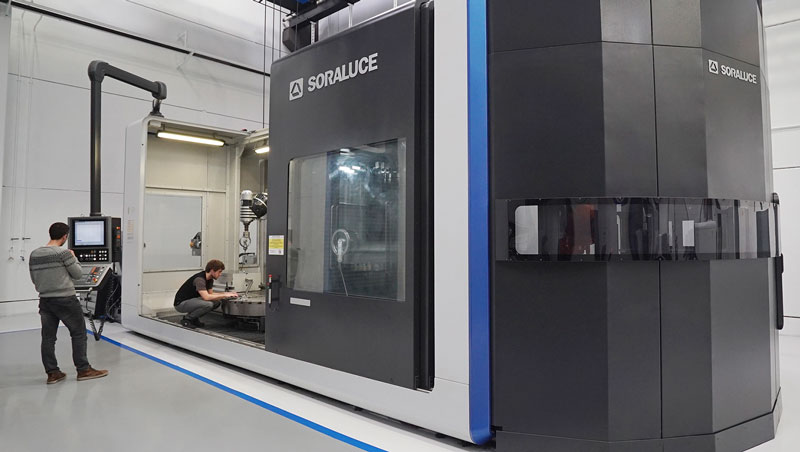
The digital grinding hub combines physical and digital environments, featuring a SORALUCE machine with additional sensors and a virtual commissioning setup to simulate the manufacturing plant. Once validated, the solution will be installed and tested in GOIMEK’s operational production plant.
Pre-pilot at TU Wien (IFT)
This pre-pilot focuses on the first real-world implementation of the theoretical approach, infrastructure and data architecture developed for the Voestalpine use case. Using the IFT Tec-Lab laboratory in Vienna, a scaled-down model of the large Voestalpine production site has been created. Challenges such as difficulties in the machine data space connection, fullly utilising the AAS framework and the meaningfulness of the developed scheduling and resilience assessment tools are being addressed.
This first version of the use case implementation allows us to learn, solve and improve the theoretical approach, without extraordinary effort and the stopping of the production process at the Voestalpine production plant.
Prior research and development by IFT and Voestalpine have been instrumental in creating theoretical frameworks and tools for reconfiguration scheduling and resilience assessment. Applying these frameworks in the pre-pilot provides opportunities to:
- validate the research outcomes,
- identify unforeseen effects and impacts on stakeholders and the environment and
- demonstrate the solutions’ value for manufacturing companies.
By applying the theory first on a pre-pilot use case and then on an actual production process, research is advanced, and a positive real-world impact created.
